Building Automated Affiliate Income Streams That Actually Work
When I first got into affiliate marketing, I made every mistake you can imagine. I built a niche website around a topic I barely understood, wrote a handful of product reviews, and then waited for the money to roll in. It didn't. Months went by, and my Amazon Associates earnings sat at a flat zero. The problem wasn't the products or the platform. It was that I had no system. The idea of automated affiliate income sounded like a pipe dream. But after years of trial and error, I can tell you it's real. It just requires a different approach than most beginners expect.
The Shift from Hustle to System
Affiliate marketing has a reputation for being a side hustle. You pick a product, write a post, paste your link, and hope for clicks. That works if you have an existing audience. But for most of us, building that audience from scratch takes time and effort. The real shift happens when you stop treating affiliate sites like blogs and start treating them like assets. That means thinking about SEO, site architecture, and user intent from day one.
Automated affiliate income doesn't mean you set up a site and never touch it again. It means you build a machine that can generate traffic and commissions without requiring you to be online every hour. The core components are a solid content management system, smart keyword research, and a focus on long-tail keywords that match what real people type into Google. When you get those three things right, search engine rankings follow.
Why Most Affiliate Sites Fail
I've seen people pour months into a site only to get zero organic traffic. The usual suspects: they target keywords that are too competitive, they ignore user intent, or they build a site that Google can't properly index. A site that ranks for "best running shoes" against established players like Runner's World or REI is a lost cause. But a site that targets "best running shoes for flat feet on a budget" has a fighting chance. That's where long-tail keywords shine. They have lower search volume but much higher conversion potential.
Another common failure is poor site architecture. If your pages are buried under a confusing navigation menu or your URLs are a mess, Google's crawlers will struggle. Using a clean content management system like WordPress helps, but only if you set it up correctly. Simple plugins for SEO, caching, and Google Search Console integration can make a huge difference. The goal is to make it easy for Google to find your content and understand what it's about.

Tools of the Trade
You don't need a big budget to start. Free or low-cost tools can handle most of the heavy lifting. For keyword research, Ahrefs offers a webmaster tools tier that gives you solid data on search volume and difficulty. Pair that with Google Search Console to see which queries your site already ranks for. Backlinks are another piece of the puzzle. You can build them naturally by writing genuinely useful content that other sites want to reference. A single high-quality backlink from a relevant site can boost your authority score more than a dozen low-quality ones.
When it comes to monetization, most people start with Amazon Associates because it's easy to set up. But you should also look at other networks like ClickBank, especially if you're in a niche where digital products or high-commission offers make sense. For physical products, linking to Shopify stores or specific product pages can work well, but check the store's affiliate terms first. The key is to match the monetization method to your audience's needs, not just your own.
How AI Changes the Game
AI has made it possible to automate parts of the content creation process that used to eat up all your time. But let me be clear: AI is not a replacement for human judgment. It's a force multiplier. You can use AI to generate drafts, suggest related keywords, or even analyze competitor content. But the final polish, the tone, and the real-world examples need a human touch. If you just publish AI-generated text without editing, Google will penalize you. The algorithm is good at detecting low-effort content. So use AI wisely, but never skip the editing step.
For niche websites, AI can help you scale without burning out. Instead of spending three hours on a single product review, you can spend 30 minutes refining an AI draft and another 30 minutes adding your own experience. That frees up time for outreach, building backlinks, and improving site architecture. Over a few months, those small efficiencies add up to a significant advantage.
Realistic Expectations for Passive Income
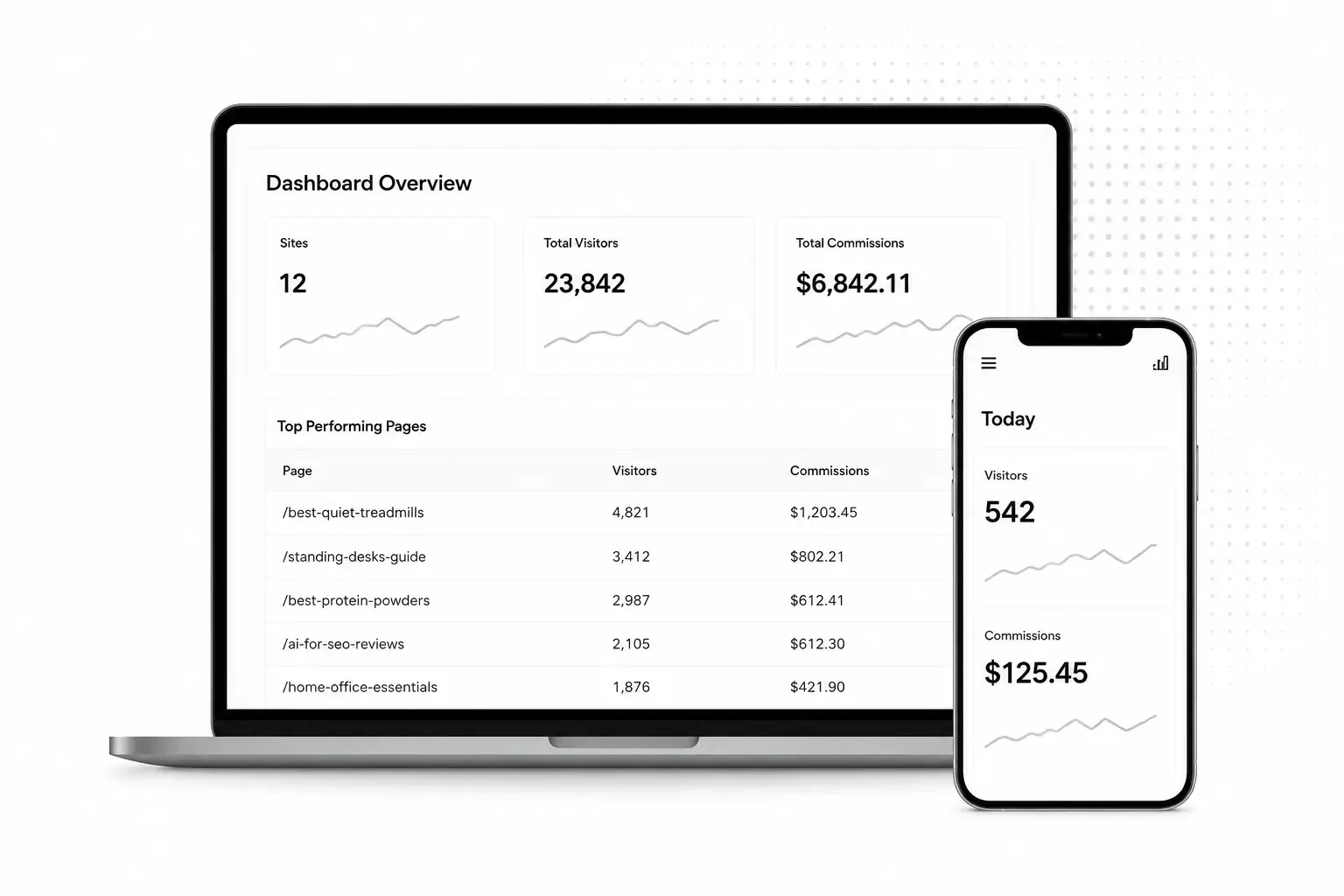
Passive income from affiliate sites is not "get rich quick." It's more like "get rich slow." I've had sites that earned nothing for the first six months, then slowly climbed to a few hundred dollars a month. The ones that eventually generated thousands started with a solid foundation. They had clear user intent guiding every page. They focused on a single niche rather than trying to cover everything. And they built backlinks gradually, one at a time.
One approach that works well is to start with a small cluster of 10 to 20 articles around a specific topic. Use Google Search Console to monitor which pages get impressions, then double down on those topics. Expand the cluster, add internal links, and watch your search engine rankings improve. Over time, that cluster becomes a small authority in its corner of the web. That's when automated affiliate income starts to feel real. You wake up to commissions from sales you had no hand in making. The site works while you sleep.
Common Pitfalls and How to Avoid Them
- Chasing high-volume keywords too early. Target long-tail keywords first. Build momentum before going after the big ones.
- Neglecting site architecture. A flat structure with clear category pages helps both users and Google. Avoid deep nesting.
- Ignoring user intent. Someone searching "how to fix a leaky faucet" wants a guide, not an affiliate link to a faucet. Match your content to intent.
- Over-relying on a single traffic source. Diversify. Pinterest, email lists, and social media can supplement Google traffic.
- Giving up too soon. SEO takes months. Patience and consistent effort beat short bursts every time.
Putting It All Together
Building a site that generates automated affiliate income is not about luck. It's about following a repeatable process. Start with keyword research using a tool like Ahrefs. Identify a niche where you have some knowledge or can learn quickly. Set up a clean WordPress site with a focus on site architecture and fast load times. Write content that matches user intent, using AI as an assistant, not a crutch. Then promote that content by building backlinks and monitoring your progress with Google Search Console.
Over time, your authority score grows. Google trusts your site more. Your search engine rankings climb. And that's when the passive income really kicks in. You don't have to be a tech wizard or a social media influencer. You just have to be consistent and smart about where you put your effort. The system works if you work the system.

A Final Note on Sustainability
The internet changes fast. Google updates its algorithm every few months. Affiliate networks adjust their terms. What works today might not work next year. That's why it's important to build a site that can adapt. Keep learning, keep testing, and never fall in love with a single tactic. The principles of SEO - good content, solid backlinks, clear site architecture - have stayed steady for years. Stick with those, and your automated affiliate income will have a much longer shelf life than any quick hack.